
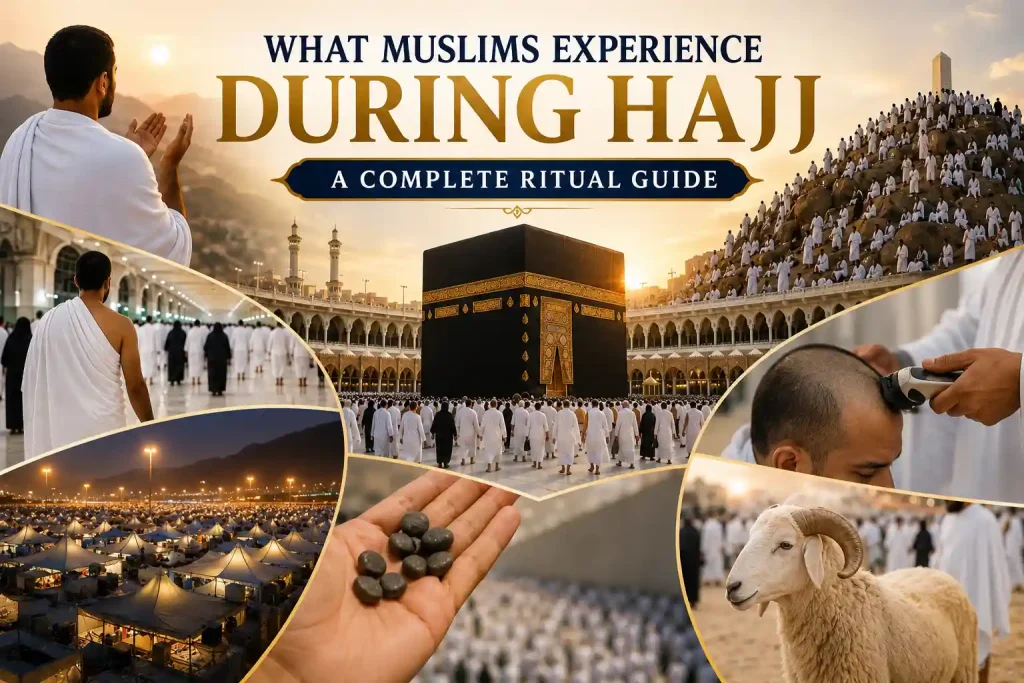
People often ask, what do muslims do during hajj, but the answer goes far beyond rituals. Pilgrims retrace the footsteps of Prophet Ibrahim (AS), Hajar, and Prophet Muhammad ﷺ while confronting their own fears, weaknesses, and hopes. Every movement carries spiritual meaning.
Every year, millions of Muslims move in the same direction, wearing the same simple garments, reciting the same prayer, that is what show the true meaning of Islam.
- Wealth disappears
- Nationality disappears
- Titles disappear
Hajj is not a sightseeing trip or a cultural festival. It is a return to Allah. A believer leaves behind routine life and enters days filled with humility, exhaustion, prayer, patience, and surrender. For many pilgrims, the journey changes them long after they return home.
What is the difference between Hajj & Umrah
Many first-time travelers confuse Hajj and Umrah because both involve visiting Makkah and performing sacred acts around the Kaaba. However, they are not the same. Umrah is a voluntary Sunnah pilgrimage that Muslims can perform at almost any time of the year. It includes Ihram, Tawaf, Sa’i, and cutting the hair. The rituals are shorter and usually completed within a few hours.
The hajj pilgrimage, meanwhile, is one of the five pillars of Islam. It becomes obligatory once in a lifetime for Muslims who meet the required conditions. Hajj can only be performed during specific dates in Dhul Hijjah.
Another major difference is scale and emotional intensity. Umrah feels deeply spiritual, but Hajj carries a level of sacrifice and endurance unlike anything else. Pilgrims spend days moving between Mina, Arafat, and Muzdalifah alongside millions of others.
When is Hajj Performed? Hajj dates 2026-27
Hajj is performed only in the Islamic month of Dhul Hijjah every year. It cannot be done at any other time. The expected Hajj dates 2026-27 will also follow the same lunar calendar pattern, shifting slightly each year.
Pilgrims usually arrive in Makkah before the 8th of Dhul Hijjah and stay until the 13th. Therefore, planning early is important because travel, hotels, and group bookings fill quickly once official dates are announced.
What are the Different Types of Hajj
Islamic law recognizes that pilgrims arrive from different regions and circumstances. Because of that, scholars identified three valid methods for performing Hajj. Each type follows the Sunnah and remains fully acceptable.
Hajj Tamattu
Hajj Tamattu is the most common option for international pilgrims today. In this method, a pilgrim performs Umrah during the months of Hajj, exits the state of Ihram afterward, and then re-enters Ihram on the 8th of Dhul Hijjah to begin Hajj rituals.
This break between Umrah and Hajj gives travelers time to rest physically before the demanding days ahead. Most organized international groups follow this structure because it is simpler and more manageable.
Hajj Qiran
Hajj Qiran combines Umrah and Hajj within one continuous state of Ihram. The pilgrim enters Ihram with the intention for both acts together and remains in that sacred state until the major rituals are completed. There is no break between Umrah and Hajj. Because the Ihram restrictions continue for several days, many people find this method physically demanding.
Hajj Ifrad
Hajj Ifrad involves performing Hajj alone without Umrah. This method is more commonly chosen by residents of Makkah or nearby regions who can easily access the holy sites throughout the year. The pilgrim enters Ihram solely for Hajj and completes only the Hajj rituals.
Who is Obligated to Perform Hajj?
For anyone searching for a practical hajj guide for beginners, understanding obligation comes first. Hajj is mandatory only when specific conditions are fulfilled.
A Muslim must have:
- Reached adulthood
- Sound mental capacity
- Sufficient financial means beyond debts and family necessities
- Physical ability to travel and complete the rituals
- A safe route to Makkah
- Proper family support and care arrangements at home
Islam does not burden people beyond their capability. Someone struggling with severe illness, financial hardship, or unsafe travel conditions is not sinful for delaying Hajj.
What are the Main Rituals of Hajj?
The confirmed 2026 Hajj dates are expected to run from Monday, May 25 to Saturday, May 30, 2026, corresponding to the 8th through 13th of Dhul Hijjah 1447 AH.
These days carry enormous emotional and physical weight. Sleep becomes limited. Temperatures rise. Crowds swell into the millions. Yet pilgrims continue moving with tears, prayers, and quiet determination. These islamic pilgrimage rituals are designed to strip away comfort and remind believers of dependence on Allah.
And throughout this journey, the question keeps returning in every heart: what do muslims do during hajj at each stage of this intense experience?
1. Ihram: Embracing Simplicity
Before entering the sacred boundaries, pilgrims enter Ihram.
Key actions include:
- Wearing simple white garments for men
- Avoiding perfumes and scented products
- Refraining from arguments and harmful speech
- Reciting the Talbiyah repeatedly
- Making the sincere intention for Hajj
At that moment, status disappears completely.
2. Tawaf: Circling the Kaaba
Pilgrims circle the Kaaba seven times in worship and reflection.
During Tawaf, pilgrims:
- Move counterclockwise around the Kaaba
- Recite personal prayers and supplications
- Reflect on Allah’s mercy and forgiveness
- Experience the overwhelming unity of the Muslim world
Many people become emotional here for the first time.
3. Sa’i: Walking Between Safa and Marwah
Sa’i honors the struggle of Hajar as she searched for water for her son Ismail.
Pilgrims:
- Walk seven times between Safa and Marwah
- Reflect on trust in Allah during hardship
- Remember the miracle of Zamzam water
- Continue prayers throughout the journey
This ritual carries deep emotional power, especially for parents.
4. Arafat: The Core of the Journey
The Day of Arafat is considered the heart of Hajj.
Pilgrims spend the afternoon in worship while standing or sitting in prayer across the plain of Arafat.
Important acts include:
- Making constant dua
- Seeking forgiveness sincerely
- Listening to sermons and reminders
- Reflecting on death and the Day of Judgment
Many scholars say this is the moment that answers the question, what do muslims do during hajj, because Arafat captures complete surrender before Allah.
5. Muzdalifah and Mina: Staying Firm
After sunset, pilgrims travel to Muzdalifah before returning to Mina.
During this stage, pilgrims:
- Collect pebbles for the stoning ritual
- Sleep outdoors under the open sky
- Perform the symbolic stoning of the pillars
- Remember Prophet Ibrahim’s rejection of Satan’s whispers
Fatigue becomes very real here. Even simple acts require patience.
6. Qurbani and Eid al-Hajj: The Spirit of Sacrifice
The sacrifice commemorates Prophet Ibrahim’s willingness to obey Allah completely.
Pilgrims typically:
- Arrange the Qurbani sacrifice
- Cut or shave their hair afterward
- Celebrate Eid al-Adha in gratitude
- Continue additional Tawaf rituals in Makkah
By this stage, many pilgrims feel emotionally transformed.
How to Prepare for Hajj the Right Way?
Preparation changes everything, like early booking hajj packages from usa. Pilgrims who arrive mentally scattered or physically weak often struggle far more during the demanding days of Hajj.
Start walking regularly months before departure. Long distances between rituals surprise many first-time travelers. Strong legs and stamina matter more than people expect.
Study the rituals carefully before arriving. Confusion during crowded movements creates unnecessary stress. A notebook with key duas and ritual sequences can help tremendously.
Pack lighter than you think you need. Overstuffed luggage becomes a burden quickly. Comfortable footwear, unscented toiletries, medication, hydration packets, and simple clothing usually matter most.
Mindset preparation is equally important.
Hajj tests patience constantly. Flights get delayed. Elevators become crowded. Weather drains energy. Pilgrims who expect perfection often become frustrated. Those who prepare for discomfort usually cope far better.
From an operations standpoint, organized planning also protects your focus once you land. For many families, arranging a reliable hajj from USA itinerary with experienced guides removes major logistical pressure during the pilgrimage itself.
Most importantly, clean your intentions before departure. People remember the emotional side of Hajj far more than hotel quality or travel convenience.
Final Thoughts
Some pilgrims return home quieter than before. Others cry unexpectedly during prayer months later. Many describe feeling lighter, as though years of spiritual weight had finally lifted in Arafat.
That is the hidden side of Hajj that people rarely see in photographs.
The rituals challenge the body, but they soften the heart. A person enters the sacred journey carrying stress, pride, regrets, distractions, and sins. They return with a different awareness of life, death, gratitude, and mercy.
For those still wondering what do muslims do during Hajj, the simplest answer may be this: they leave behind who they were and ask Allah for the chance to begin again.
Planning your sacred journey? Explore trusted Hajj and Umrah travel options with One More Holiday and prepare for a spiritually focused experience with guided support every step of the way.