
At a Glance
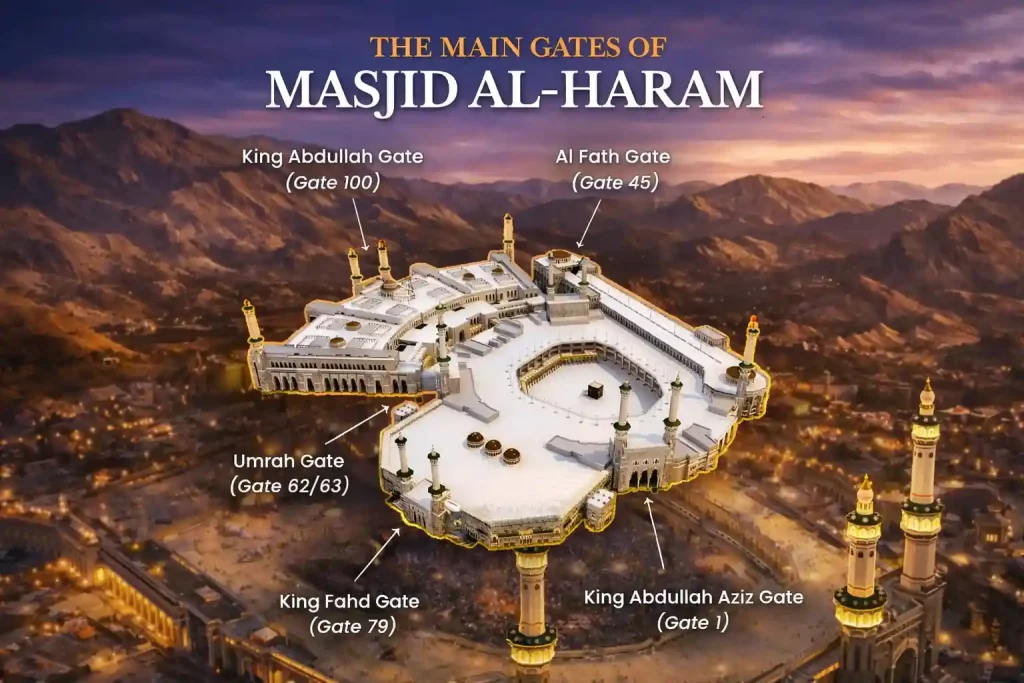
Masjid Al-Haram has well over 200 gates, but most pilgrims navigate using five main landmark gates (often recognised by being larger and flanked by twin minarets): King Abdulaziz (Gate 1), Bab Al-Fath (Gate 45), Bab Al-Umrah (Gate 62/63), King Fahd (Gate 79), and King Abdullah (Gate 100). These are your safest “anchor points” for Tawaf and meeting your group.
Choosing the Right Gate at Masjid Al-Haram
When you arrive in Makkah, jet-lagged, emotional, and trying to keep your group together, knowing “the right gate” isn’t trivia. It’s how you avoid walking in circles and wasting energy before Tawaf even begins. This Masjid Al-Haram gates guide is written for pilgrims who want a simple, reliable way to recognise the main gates, understand which gate is best for each purpose, and move confidently toward the Mataf (Kaaba area) or the Sa’i route.
Gate routes can be adjusted during peak hours to manage crowds. So think of gates as landmarks and starting points, and then follow on-ground signage and staff guidance once you’re there.
Masjid Al-Haram Five Main Gates Guide
These five are commonly treated as the primary “big gates” pilgrims use for orientation and access:
- King Abdulaziz Gate (Gate 1)
If Masjid Al-Haram had a “front door” for many visitors, this is the one people mean. Gate 1 is a major reference point and one of the most commonly used landmarks. It’s a strong choice if you want a clear, easy-to-remember gate number for your group.
First-timers, families setting a meeting point, and anyone wanting a straightforward “main gate” reference.
- Bab Al-Fath (Gate 45)
Bab Al-Fath is known as the “Gate of Victory” and is widely referenced as one of the main landmark gates (Gate 45). Some sources also discuss its historical association with the Conquest of Makkah (often mentioned as tradition).
Pilgrims approaching from northern routes and anyone who prefers a strong landmark gate that’s not always the most congested option.
- Bab Al-Umrah (Gates 62/63)
Bab Al-Umrah is one of the most useful names to know because it’s frequently referenced by pilgrims arriving specifically for Umrah. It’s commonly listed among the key main gates and often discussed as a convenient entry point for the Umrah flow.
Best gate for Umrah pilgrims (often): Bab Al-Umrah is regularly recommended because it’s easy to identify and commonly used by Umrah-goers. (Always follow signage on the day.)
- King Fahd Gate (Gate 79)
King Fahd Gate is another main landmark entrance (Gate 79). Many pilgrims mention it for its practical access routes and its prominence near central hotel/tower landmarks.
People who want a very prominent gate and clear circulation routes (helpful if you’re moving with a group).
- King Abdullah Gate (Gate 100)
King Abdullah Gate (100) is commonly linked with the newer expansion areas and is often described as large and modern, built to help manage heavy crowd flow.
Peak-time crowd management, wide walkways, and a “less frantic” entry experience when the closest gates are jammed.
Other Commonly Used Gates of Masjid Al-Haram (Beyond the Main Five)
Here are other commonly referenced gate names at Masjid Al-Haram (besides the “big five”), in list format:
- Bab as-Safa (Gate 11): A key Sa’i access gate that brings you toward the Safa side/start of the Safa–Marwah walk.
- Bab al-Marwah (Gate 23): A major Sa’i access gate near the Marwah end, widely used for entering/exiting around the Sa’i area.
- Bab Ajyad (Gate 5): A common southern entry used by many pilgrims approaching from the Ajyad side/hotel areas.
- Bab Bilal (Gate 6): A southern gate named for Bilal (RA), commonly listed among the frequently used entry points.
- Bab Hunain (Gate 9): A southern gate (between Bab Bilal and Bab Ismail) that’s sometimes partially obscured by nearby escalators.
- Bab Ismail (Gate 10): A southern gate named after Prophet Ismail (AS), often used by pilgrims coming in from that side.
- Bab an-Nabi (Gate 14): “Gate of the Prophet,” on the eastern flank, positioned near the Safa/Sa’i side.
- Bab Darul Arqam (Gate 16): An eastern gate named after Dar al-Arqam, commonly referenced near routes leading toward the Sa’i levels.
- Bab Ali (Gate 17): An eastern gate on/near the Sa’i gallery, noted for access toward the Mas‘a (Sa’i corridor).
- Bab Abbas (Gate 20): An eastern-side gate along the Safa–Marwah tunnel/route, useful as a quieter landmark entry.
- Bab Bani Hashim (Gate 21): A recognised gate name tied to the Prophet’s tribe, commonly listed among the notable entrances.
- Bab Bani Shaybah (Gate 22): A modern gate carrying an older historic name frequently referenced in gate lists.
- Bab as-Salam (Masjid Al-Haram): Located along the Safa–Marwah stretch near Marwah; historically associated in sources with “Bani Shaybah” naming and arrival-tawaf route discussions.
Important Haram Gate Info to Prevent Confusion
Here’s the simplest system that works even when you’re tired:
- Always navigate by gate number first, then by name. Numbers are easier to spot and message.
- Take a quick photo of the gate sign when you enter. If you get separated, that one photo ends the guessing.
- Use Sa’i-specific gates when you’re heading for Sa’i. For example, Bab Al-Marwah (Gate 23) is widely referenced as a major access point near the Marwah end and is known for escalator access to upper areas.
Final Takeaways
So, let’s wrap up this Masjid Al-Haram gates guide. You don’t need to learn every doorway in the Haram. You just need a calm plan: know the five main gates, navigate by numbers, and choose the entry that keeps your energy for worship, not for wandering.
If you’re booking Umrah from the US and want help matching hotel locations, walking routes, and practical gate choices for your itinerary, One More Holiday can guide you through the umrah booking details so you arrive focused, organised, and confident.