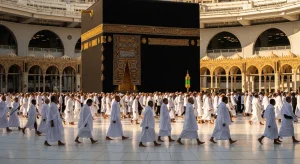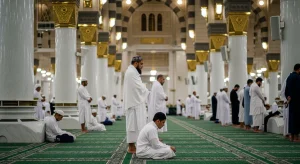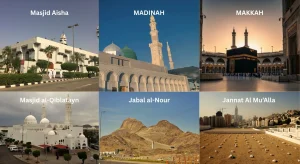

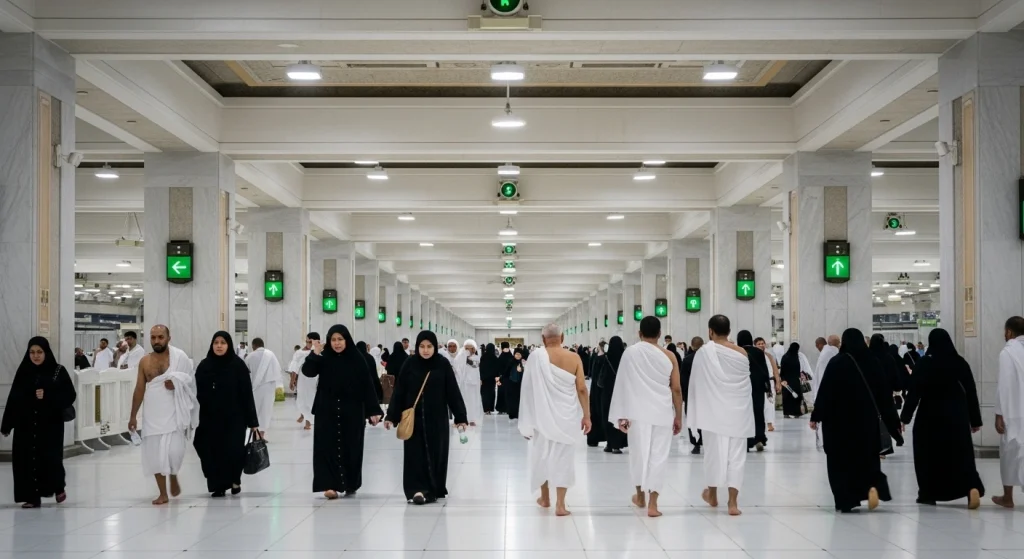
The Safa and Marwa significance comes from Sa’i: walking between Safa and Marwa seven times during Hajj and Umrah. You start at Safa and finish at Marwa, commemorating Hajar’s (AS) search for water for Ismail (AS) and reminding pilgrims that sincere effort + trust in Allah brings mercy.
If you’re coming for Umrah from the U.S., Sa’i can feel like the part you don’t want to mess up, especially when it’s crowded, and everyone around you seems to know exactly where to go. This guide breaks down the significance of Safa and Marwa, the history behind it, why it’s an act of worship (not just “walking”), and the simple steps to complete it correctly: seven rounds, starting at Safa and ending at Marwa.
What is Sa’i, and why do pilgrims walk between Safa and Marwa?
Sa’i is one of the key rites that completes Umrah after Tawaf. It’s simple in action, walking back and forth, but profound in meaning. Official Nusuk guidance explains Sa’i clearly: walk seven times starting at Safa and ending at Marwa.
For first-time U.S. pilgrims, Sa’i often feels emotionally powerful because it is a form of worship through movement. You’re not just “doing steps”; you’re reliving a moment of reliance on Allah, while keeping your own intention sincere and calm.
What is the Safa and Marwa significance in Islam?
The Safa and Marwa significance is directly anchored in revelation. Qur’an 2:158 states that Safa and Marwa are among the symbols of Allah, and connects walking between them to Hajj and Umrah.
That matters because it removes doubt: Sa’i is not a cultural practice or a historical reenactment. It’s a form of worship linked to obedience, remembrance, and gratitude. Spiritually, Sa’i teaches a balanced mindset: you do your part with patience and effort, and you accept that the outcome comes from Allah.
What is the history of Safa and Marwa (Hajar and Zamzam)?
The story behind Sa’i centers on Hajar (AS). Under Allah’s command, Ibrahim (AS) left Hajar and the infant Ismail (AS) in the valley of Makkah. When the water ran out, Hajar searched desperately for help, going from Safa to Marwa and back, until she completed seven trips. Then Allah sent Angel Jibril, and Zamzam emerged as a mercy near Ismail (AS).
This history is why the Sa’i feels personal for many pilgrims. It represents a mother’s courage, a believer’s resilience, and the reality that relief can arrive from where you don’t expect, after you’ve tried your best.
How did the Prophet ﷺ perform Sa’i?
The Prophet ﷺ performed Sa’i in a way that makes the sequence easy to follow. In the detailed narration of Jabir (RA), the Prophet ﷺ went to Safa, faced the Qiblah, declared Allah’s oneness, glorified Him, and made supplication.
The most important takeaway for most pilgrims is the starting point and direction: begin at Safa. That Sunnah-based structure is consistent with the way Sa’i is taught today in official guidance as well.
What are the Safa and Marwa steps for Umrah?
If you want the simplest “do it right” method, keep this mental model: count only when you reach the ends.
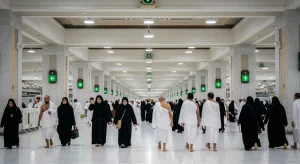
After Tawaf, follow the signs inside Masjid al-Haram toward Safa. Notes that the original “mount” isn’t in the same physical form, but the location is clearly marked (with rocks visible at ground level and signage on upper floors).
Now follow the Safa and Marwa steps:
You start at Safa, face the Qiblah, praise Allah, and make personal du’a. Then you walk to Marwa. When you arrive at Marwa, that completes round 1.
You make du’a again, then walk back to Safa. When you arrive back at Safa, that completes round 2. Continue until you complete 7 rounds, and the 7th ends at Marwa.
A practical tip: write “1 at Marwa, 2 at Safa…” in your phone notes. It prevents almost all counting mistakes.
About the green markers
Many pilgrims notice a section marked with green lights/markers. Men commonly brisk-walk/jog in that section when it’s safe and not harmful to others, while women continue at a normal pace. If the area is crowded, safety and respect come first. (On-site signage and crowd control may affect how you move.)
Distance and pacing
Sa’i across seven trips is commonly cited as approximately 3.15 km. For families, elders, or anyone worried about stamina, that’s helpful for pacing and planning hydration/rest.
What mistakes should first-time pilgrims avoid during Sa’i?
Most Sa’i issues are not “major errors”; they’re stress problems that make worship harder than it needs to be.
- Losing count is the most common. Solve it by counting only at the Safa/Marwa endpoints and assigning one person in your group as the “counter.”
- Starting from Marwa is another avoidable mistake. Sa’i begins at Safa, and official Nusuk guidance also repeats: start at Safa, end at Marwa.
- Overthinking du’a is also common. You can make personal supplications in your own words; the key is sincerity and completing the rite properly. Jabir’s narration emphasizes remembrance and du’a at Safa (and likewise at Marwa), without requiring complicated scripting.
How should U.S. travelers plan Sa’i timing for Ramadan and peak crowds?
If you’re traveling on an Umrah package from USA, Sa’i timing often depends on crowd flow, especially if you’re with family or elderly relatives. During Ramadan Umrah packages 2026, the Haram can be significantly busier, and Sa’i may take longer simply because movement is slower.
This is where working with a reliable Umrah travel agency, like One More Holiday, can help practically: you want a clear briefing on
(1) Where to enter for Sa’i.
(2) Regroup points if separated.
(3) And realistic timing.
So you’re not rushing through worship. The best agencies help first-timers stay calm and organized in the Haram.
Closing Thoughts
The easiest way to remember the whole ritual is this: start at Safa, end at Marwa, complete seven trips, and keep your heart focused on why you’re doing it. The Importance of Safa and Marwa is not just historical; it’s a living lesson in patience, effort, and reliance on Allah, one that every pilgrim experiences firsthand.
If you’re comparing an Umrah travel agency or choosing an Umrah package from USA, One More Holiday can help you plan with calm, clear guidance, especially if you’re considering Ramadan Umrah packages 2026 and want realistic support for crowds, timing, and family logistics.